
Extempore Topic & Tips: List with Tips, Importance and more..

Being able to speak on the spot to a group of viewers without a set time is amazing. Extempore can take the form of an open speech in which the speaker gives a brief introduction to a topic new to him. It evaluates the simplicity of the idea, the breadth of symbolic information, and the expressive power. This is an important part of one-on-one counseling because it improves the interviewer’s understanding of identity and the interviewer’s ability to monitor the situation.
Extempore: Meaning & Importance
Extempore, meaning “without time to prepare”, comes from the Latin ex tempore, meaning “without time.” These days, it occurs when a speaker deviates from established information or makes a statement spontaneously without prior thought.
Because of its surprise element and ability to reveal genuine opinions, extempore interviews are becoming an important part of recruitment strategies used by top colleges and prestigious companies.
What Organizations Evaluate Through Extempore:
- A strong argument with precise reasoning
- Communication skills
- Mental clarity
- Presentation of ideas in a time-sensitive, demanding setting
- Process of thought
- Speaking manner
What is Extempore Speech?
An extempore speech requires candidates to speak for one to two minutes during a meeting or event without prior preparation. This method evaluates the speaker’s presence of mind and ability to think quickly, making the candidate’s response sharp and engaging.
Extempore is also a powerful tool for students to improve their time management and communication skills. It assesses their ability to express ideas clearly, respond under pressure, and demonstrate knowledge across various subjects within a limited time frame.
Importance of Extempore Topics
Extempore topics help candidates improve their communication, self-expression, and confidence. They prepare students and professionals to think on their feet during high-pressure interviews, MBA admissions, and corporate selections.
Purpose of Extempore Topics
- A strong argument with precise reasoning
- Good thinking quality and accuracy
- Interpersonal communication
- Mental clarity and quick thought process
- Presentation under stress
- Fluent speaking manner
Role of Extempore Topics in Hiring & Admissions
Extempore is widely used in MBA admissions and corporate hiring to assess a candidate’s general knowledge, communication, and problem-solving skills. Typically:
- 1–2 minutes speech with 15–30 seconds prep time
- Topic assigned by the interviewer
- Freedom to interpret and present views
- Evaluation of clarity, confidence, and originality
List of Extempore Topics for MBA
Abstract Topics
- Academic Scores vs Intelligence
- Do We Need More Entrepreneurs or Managers?
- Is Work-Life Balance a Myth?
- Innovation vs Invention
- Liberal Education
Economy-Related Topics
- Banking Frauds
- Cryptocurrency
- Impact of COVID on Growth
- Privatization
- Globalization
Current Affairs
- Artificial Intelligence
- New Education Policy
- Moon Mission
- Impact of Covid-19
- Online Education
Social Issues
- Women’s Empowerment
- Climate Justice
- Unemployment
- Rural Development
- Reservations in India
Difference Between Extempore & GD
| Parameters | Extempore | GD |
|---|---|---|
| Assessment Standards | Critical thinking & communication | Teamwork & problem-solving |
| Duration | 1–2 minutes (individual) | 10–15 minutes (group) |
| Focus | Individual clarity | Collaborative decisions |
| Outcome | Speech/Presentation | Group resolution |
| Preparation | No prior notice | Topic given beforehand |
Skills Required for Extempore Topics
- Quick Thinking Ability
- Strong Communication Skills
- Confidence & Stage Presence
- Logical Reasoning
- Knowledge Across Topics
- Clarity of Thought
- Time Management
- Engaging Presentation Style

How to Succeed in Extempore Topics
Delivering a strong extempore speech requires quick thinking, clear communication, and confidence. Use the techniques below to structure your thoughts, manage time effectively, and present ideas with poise.
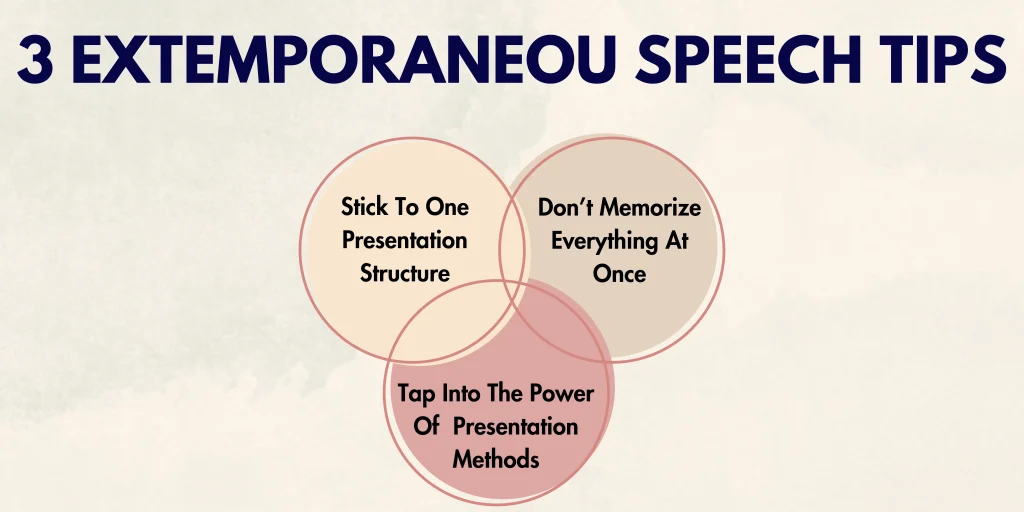
Practical Tips
Time management
Extempore speeches are time-bound. Plan a quick structure (Intro → 2 main points → Conclusion) so you cover all key ideas within the allotted time.
First thought / Central idea
Start with a clear central idea. If you speak without a structure, your message loses impact. Fix one main point and build your talk around it.
Maintain a calm demeanor
Good posture and steady voice show confidence. Avoid mumbling or rushing — calm body language increases credibility.
Tone
Use a warm, engaging tone to connect with listeners. Vary intonation slightly to keep the audience interested.
Conclusion
End with a concise takeaway or practical suggestion. Panels value solutions and logical reasoning, so finish strong and focused.
Points to Remember
- Improvisation is spontaneous — embrace it rather than trying to memorize lines.
- Extempore tests speaking skills, thought process, and clarity of expression.
- It promotes quick thinking and creative reasoning.
- Regular practice improves confidence, articulation, and time management.
3-Step Speech Framework (use for any topic)
- Intro (10–15s): State your central idea clearly. Example: “I believe X because…”
- Body (40–70s): Give 1–2 focused points with a short example or fact each.
- Conclusion (10–15s): Summarize and end with a practical takeaway or suggestion.
Tip: Practice with a timer (15–30s prep + 60–90s speech) and record yourself — then review to improve clarity & pacing.
Important FAQs on extempore speech
Check below some of the Frequently Asked Questions (FAQs) related to extempore speech:
What is an extempore speech?
How do I prepare for extempore topics?
What are common extempore topics for MBA interviews?
What tips can help me perform well in an extempore speech?
How much time do I get to prepare for an extempore speech?
Need help with admissions or coaching?
Use the contact form — we'll respond with guidance on colleges, timelines, and coaching options.